
BMO Field and BC Place: Getting to Know Canada’s 2026 World Cup Grounds
Words and pictures by Sasha Hartman

Assuming the tournament goes forward amid a variety of well-deserved cries for boycotting and cancellation, Canada will co-host the 2026 FIFA World Cup alongside Mexico and the United States this summer. The Canada-based games will be split between two of the largest football grounds in the country: BMO Field and BC Place. In typical giant-country fashion, the stadiums are separated by a causal five hour flight, with BMO Field in Ontario in the east and BC Place in British Columbia (also known as BC - get it?) on the west coast. As might be expected from two grounds so far apart, they each have distinct atmospheres and histories that will lend themselves to memorable World Cup experiences.
BMO Field
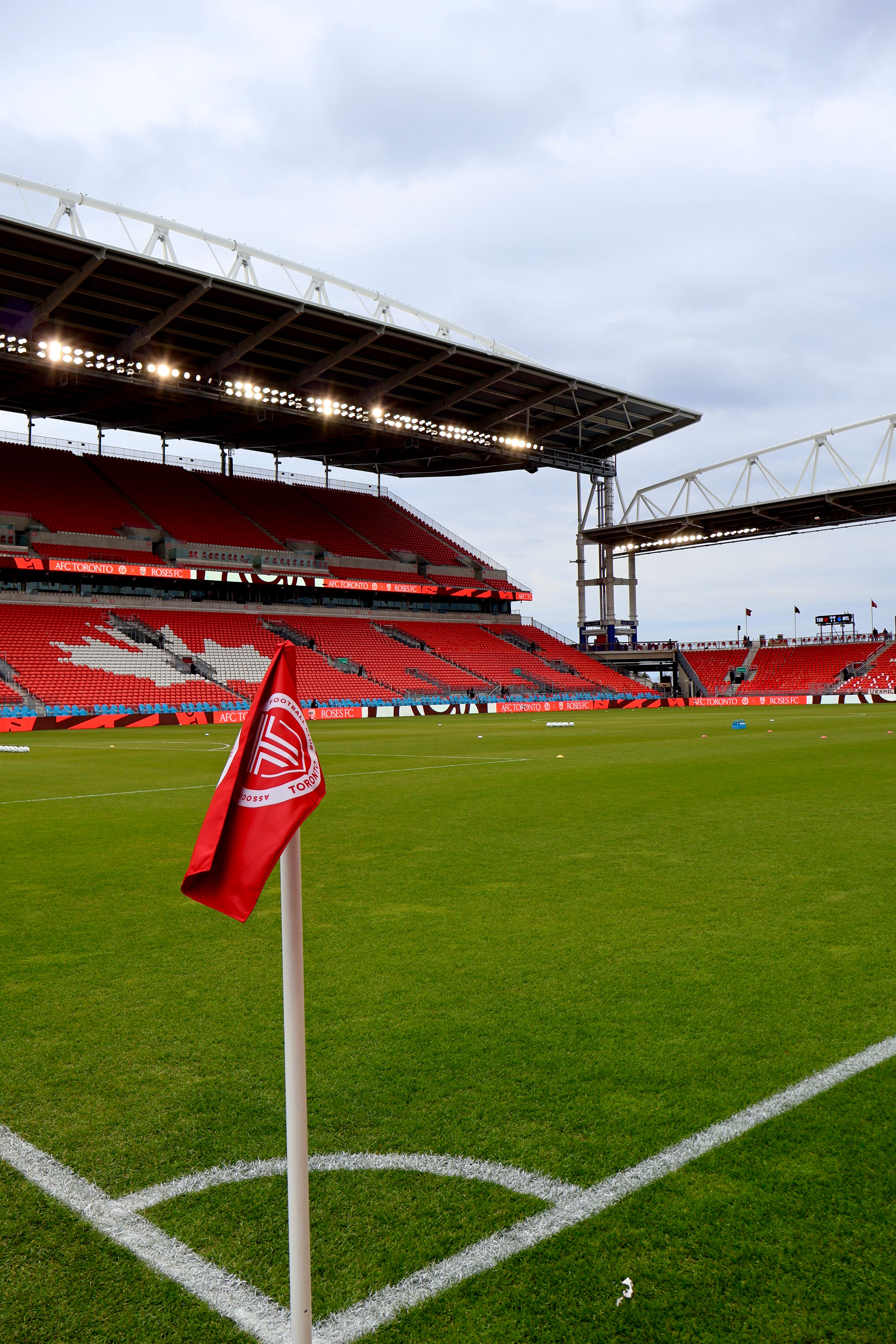
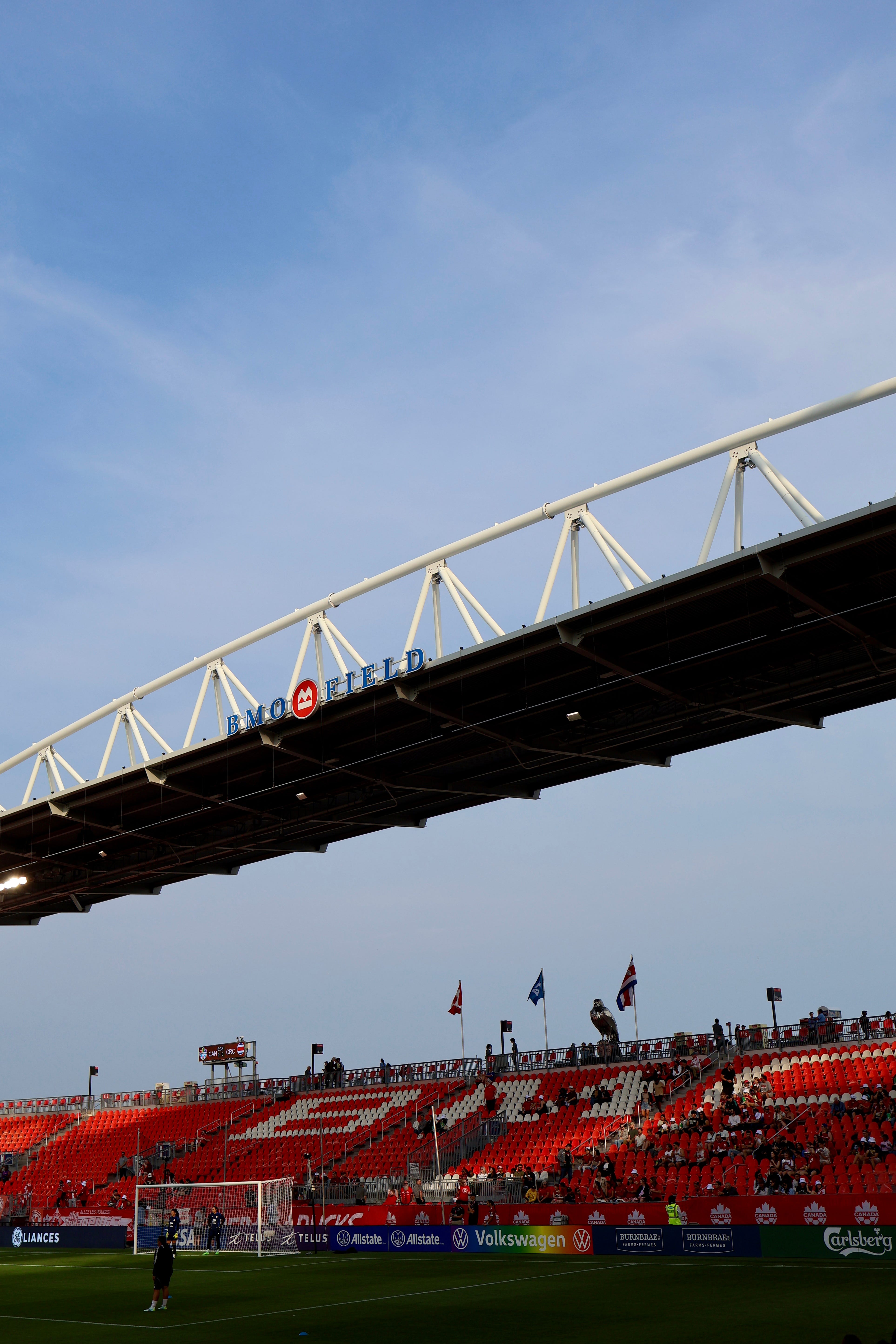
Let’s begin with BMO Field, as one of my home grounds. BMO Field was the first football-specific ground in Canada, built for the 2007 FIFA U-20 World Cup. It is located in Toronto (if you want to sound like a Torontonian, don’t pronounce the second ‘t’) - the largest city in the country, at a cool 2.7 million people. BMO stands for Bank of Montreal, a Canadian bank and financial services company, that holds the naming rights for the ground. BMO was erected in 2007 within Exhibition Place - a district used for exhibitions and tradeshows - on the same site as four previous stadiums. At the time of opening, it had a capacity of 25,000.
BMO Field is an outdoor stadium with four main stands, two of which (east and west) have upper decks. All of the seats are red, with the exception of designs in white: a maple leaf on the east stand, ‘Toronto’ and a portion of the Toronto FC logo on the west, and BMO on the south. A giant metal sculpture of a hawk sits above the south stand, Toronto FC’s club mascot and ‘symbolic overseer of BMO Field’.
BMO has undergone many phases of construction since its opening. Between 2014 and 2016, a roof was added over the seating (which has done nothing to protect from the snow or wind, let me tell you) and the upper deck was added to the east stand, boosting the capacity to 30,000. The field was also lengthened to accommodate hosting Canadian football - a version of American football with slightly different rules. This winter, temporary seating at the north end has been added on the way to boosting capacity to 45,736 to meet FIFA seating requirements. Social media collectively agrees that no one wants to sit in these steep, potentially unsafe and view-obstructed seats.
As one would hope for a football-specific stadium, BMO has hosted many notable football teams and events. The ground has been home to Toronto FC since its founding in 2007, a men’s Major League Soccer (MLS) team, and will be one of two homes for AFC Toronto in the 2026 season, a women’s side in the Northern Super League (NSL). BMO has hosted finals for both leagues, including the MLS Cup in 2010, the MLS finals in 2016 and 2017 (featuring Toronto FC), and the inaugural NSL final in 2025 (featuring AFC Toronto and a side of heart break). Outside of North American matches, BMO has also hosted the 2008 MLS All-Star Game played against West Ham United, the 2014 International Champions Cup between Olympiacos and A.C. Milan, and 2014 FIFA U-20 Women’s World Cup matches.
Outside of (association) football, BMO is also home to the Toronto Argonauts, a men’s team in the Canadian Football League (CFL). The CFL’s championship game, the Grey Cup, was played there in 2016. Rugby matches have been hosted at BMO, including for Canada’s national team and during the 2015 Pan-American Games. A couple of National Hockey League games have also been held at the ground. Outside of sports, only one concert has taken place at the ground - Genesis, in 2007.
During the World Cup, BMO will be renamed ‘Toronto Stadium’ to accommodate FIFA’s policies on corporate-sponsored names. It will host six matches - including Canada’s opening match on June 12th which will be the first men’s World Cup game hosted on Canadian soil - and a game during the knockout round.
BC Place
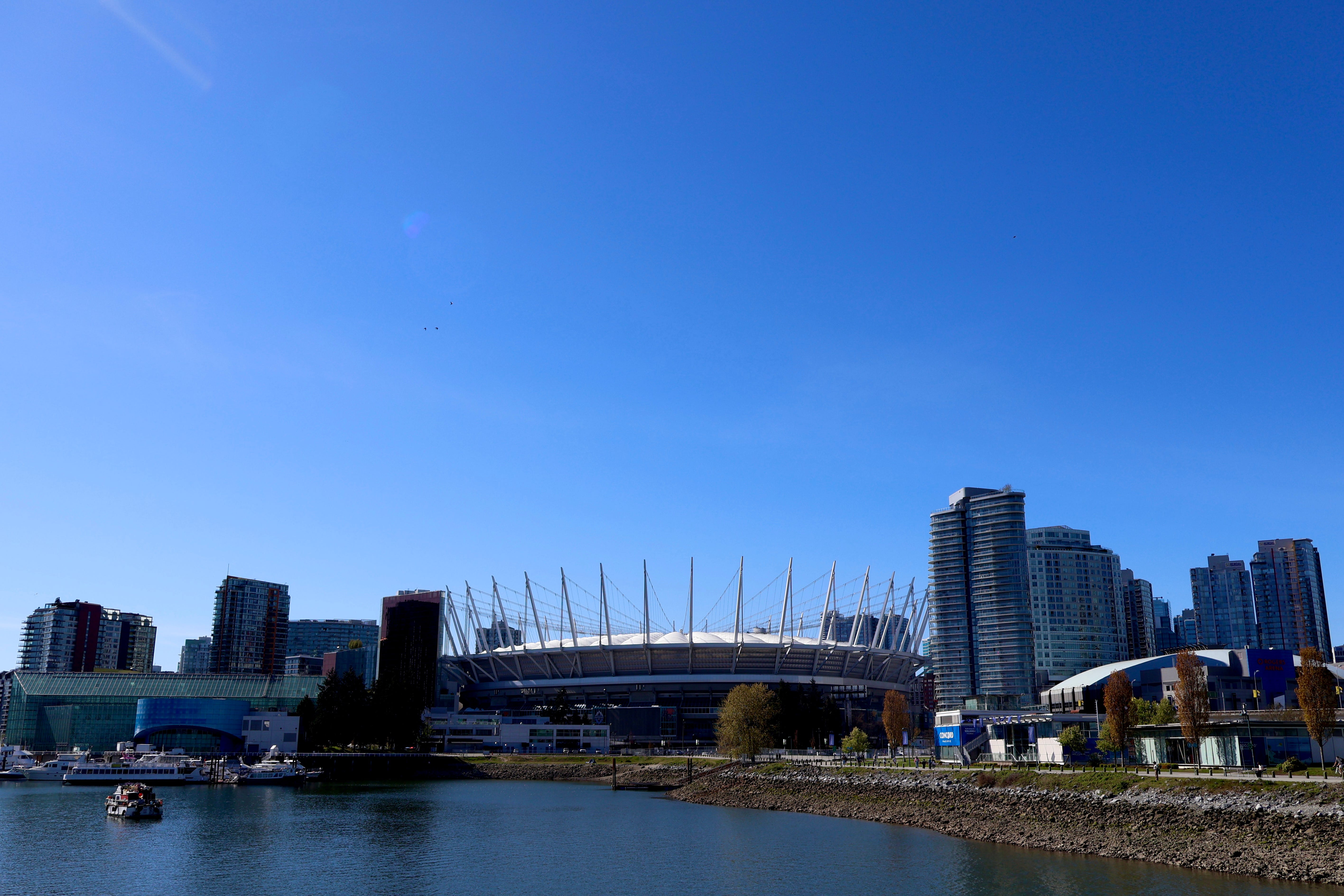
BC Place is located in Vancouver, British Columbia (Toronto’s cooler, more relaxed cousin). The ground opened in 1983 as part of the Expo 86 world fair. At the time, it was the world’s largest indoor structure with an inflatable roof - essentially a big balloon supported by pressurised air.
BC Place includes an upper and a lower bowl, with red and grey seats. The upper portion of the ground’s perimeter is lit up at night with words or patterns by a 35-foot LED display, which can be viewed from both inside and outside. From afar, the ground looks a bit like a crown by day and a spaceship by night, from the 36 steel masts that now hold up the roof.
Renovations between 2011 and 2015 replaced the (damaged) inflatable roof with a retractable one supported by cables - the largest of its kind. A centre-hung scoreboard was also added - the second largest in North America (BC Place really going for the records) - which doubles as storage for retracted roof fabric. The new roof allows the sun (and air when open) to enter the ground, providing a bright and airy feel.
BC Place is a multi-use stadium, hosting a variety of teams and events. In terms of football, it is home to the Vancouver Whitecaps of the MLS. The official launch of the NSL - Canada’s first professional women’s league - was held there in April 2025, between Vancouver Rise FC and Calgary Wild FC. (I was lucky enough to be there and it was magical.)
The ground has hosted several international football matches. In 2012, the CONCACAF Women’s Olympic Qualifying Tournament final between the US and Canada was held there, with the highest attendance for a women’s qualifying match at 25,427. The ground also hosted nine matches throughout the tournament stages of the 2015 FIFA Women’s World Cup, including the championship match between Japan and the United States. Most recently, the Canadian Women’s national team played Australia at the ground in 2023 as part of a farewell tour for Christine Sinclair, with the stadium temporarily named in her honour. This is where I bring out my favourite football stat, that Sinclair is the world’s all-time leader in international goals scored (for both men and women) at 190 goals.
BC Place is also home to the BC Sports Hall of Fame, the BC Lions of the CFL, and the Canada Sevens - part of the World Rugby Sevens Series. The ground was the main stadium for the 2010 Winter Olympics and Paralympics, has hosted the Grey Cup 10 times between 1983 and 2024, and held an exhibition game of the National (American) Football League and an ‘outdoor’ National Hockey League game.
Unlike BMO, BC Place is no stranger to a concert. In 2023, Ed Sheeran performed and set a new attendance record of 65,061, beating the previous record of 63,803 set by U2 in 2009. As all Canadian Swifties will know, BC Place hosted the final three shows of Taylor Swift’s The Eras Tour in 2024.
During the World Cup, BC Place will host seven games: five in the group stages, including two home games for Canada, and two knockout matches, one in the round of 32 and one in the round of 16. If Canada wins their group, they will play in both of these knockout matches.
Looking ahead to June
If all goes to FIFA’s plan, Canadian and international football fans alike will get to experience the thrill of World Cup action at these two pillars in Canada’s football landscape. Both grounds are beautiful and steeped in history - well deserving of hosting football on the world stage. Time will tell what new pieces of BMO Field and BC Place’s legacies may (or may not) be written this summer, as eyes turn to Canada for the World Cup.

Thanks to all of our Club Groundhopper Sponsors for supporting our work

Interesting to hear Vancouver described as Toronto's cooler, more laid back cousin, because that's pretty much how I'd describe Toronto after visiting last summer. It's my only point of reference though. Didn’t get to BMO, but looked a smart ground from atop the CN Tower! And I can imagine both cities would be a great place to be when the World Cup takes place